Call for abstracts information
 We would be delighted to receive your abstract. We would be delighted to receive your abstract.
Abstracts should be received by Monday 21 January 2013.
 For information about abstracts for core papers, theme papers, symposia and posters please see below. The guidelines for submitting an abstract are also shown below or can be downloaded here. For information about abstracts for core papers, theme papers, symposia and posters please see below. The guidelines for submitting an abstract are also shown below or can be downloaded here.
 Please download a copy of the NET2013 Call for Abstracts here. Please download a copy of the NET2013 Call for Abstracts here.
 Abstracts for core and theme papers should relate to one of this year's themes shown here. For further information about the themes download the key issues. Abstracts for core and theme papers should relate to one of this year's themes shown here. For further information about the themes download the key issues.
Developing teachers
Educational innovations and enhancement
Education in clinical practice and practice development
E-learning/blended learning
Humanising healthcare education
Internationalisation and global challenges in healthcare education
Interprofessional learning and working
Leadership development
Learning and teaching strategies
Partnership working
Research evidence base of healthcare education
Role of the service user
Social, economic and policy drivers
Student experience
 This is your opportunity to participate fully by presenting a core paper, a theme paper, symposium or poster. Come and present your work, pass on your ideas and share best practice with colleagues. This is your opportunity to participate fully by presenting a core paper, a theme paper, symposium or poster. Come and present your work, pass on your ideas and share best practice with colleagues.
Abstracts will be selected through double-blind peer review by the international scientific panel and the organising committee.
In response to delegate feedback, we will be making the core papers and all other abstracts available on our website two weeks before the conference. These will only be accessible to delegates who have registered for the conference and we will issue a link to those delegates. We will not be providing the core papers and abstracts in booklets at the conference, instead all delegates will receive them on a memory stick as part of the delegate pack. If you have any queries about this please contact the conference office.
Core papers
Core paper presenters should be aware that core papers are vital to the theme sessions; they set the scene and help direct the discussion and debate for the rest of the session. Your core paper must offer the necessary vision, depth, breadth and strategic/policy perspective to provide a suitable context to facilitate effective group discussion of relevant issues.
Core presentations will be allocated 30 minutes followed by 15 minutes for discussion. If your abstract is chosen as a core paper, you will need to prepare the full text (approximately 2,000 words) by Monday 3 June 2013. The full text will be available to registered delegates on our website before the conference and will also be on memory sticks included in the conference delegate packs. Core paper presenters are required to attend the entire theme session to contribute to the ongoing debate and discussion and this will be a condition of acceptance.
Core presentation abstracts must:
be relevant to the theme
set a high standard for other papers
include research and critical analysis to stimulate discussion
display academic scholarship in research, conceptual analysis and new insights
reflect the conference’s international focus.
For full guidelines on submitting an abstract either download them as a pdf or see below.
Theme papers
Theme papers follow the core paper and will be allocated 20 minutes, followed by 10 minutes for discussion. The abstracts of the theme papers will be available to registered delegates on our website before the conference and will also be on memory sticks in the conference delegate packs. Theme paper presenters are expected to attend the entire theme session to contribute to the ongoing debate and disucssion.
Symposia
A symposium provides an opportunity to explore a leading edge topic that may or may not be addressed by this year’s conference themes. A symposium should typically consist of three or four papers with a shared focus. Each symposium will be allocated 90 minutes, to include at least 25 minutes for debate and discussion.
Authors wishing to submit papers as a symposium must:
nominate one person as the main correspondent to submit the abstract
complete a SINGLE abstract
include an outline of the proposed symposium
itemise the individual papers and their authors
give a brief outline for each of the papers
clearly demonstrate how the papers will link together.
Poster abstracts and best poster prize
Posters must address topical, innovative and emerging issues regarding the future of healthcare education that may or may not be addressed by this year's conference themes. You will need to be available to talk with delegates about your poster during the viewing sessions.
For full guidelines on submitting a poster abstract either download them as a pdf or see below.
 Download full details on size and orientation of posters. Download full details on size and orientation of posters.
There will be a special prize, kindly donated by Elsevier, for the best poster. Conference delegtaes will  be invited to vote for the best poster. Posters should be judged on the following criteria: be invited to vote for the best poster. Posters should be judged on the following criteria:
the contribution the poster makes to healthcare education
clarity of purpose and message
accuracy and quality of content
presentation and impact
innovation in design.
Best pre-registration student abstract award
The NET2013 Organising Committee actively encourages papers from pre-registration students, particularly under the ‘Enhancing the student experience’ theme. This is an ideal opportunity for students to share their ideas in theme group sessions in a supportive and inclusive environment. Please ensure when submitting your abstract that you have indicated that you would like it to be considered for the 'best student abstract'.
 For the wining pre-registration student abstract award we are delighted to offer: For the wining pre-registration student abstract award we are delighted to offer:
one free place at NET2013
travel expenses up to £500.
We would like to announce that the winner of the best student abstract for NET2012 was The impact of non-preceptor nursing staff on student learning in the clinical setting by Caitlin Bowron and Alanna Webster from McMaster University - Mohawk College, Hamilton, Canada.
Assisted student places
We are also able to offer a number of assisted places for full-time students on a first-come, first-served basis. Please contact the NET conference office to discuss how to reserve one of these places.
First-time presenter prize
This is an ideal opportunity for those who have not presented at ANY conference before to present a paper in a supportive environment. For NET2013 we will award a first-time presenter prize of a £50 Amazon token.
If you have a co-author who is not a first-time presenter they may attend the conference, but must not take part in the presentation or answer any questions. You may give a joint presentation if both of you are first-time presenters. This must be first-ever presentation at ANY conference and only first-time presenters may give the presentation.
The award criteria are:
academic content
presentation skills
ability to engage the audience and respond to questions.
There were two winners of the first-time presenter prize for NET2012: Caitriona Dennehy, Clinical Placement Coordinator, Tallaght Hospital, Dublin, Ireland and Eloise Nolan, Teaching Fellow, University of Birmingham, UK.
Please ensure when submitting your abstract that it is marked ‘first-time presenter’. There will not be another opportunity to indicate you are a first-time presenter.
Guidelines on submitting your abstract
Abstracts for Core papers and Theme papers must be between 400–600 words.
Abstracts for a Symposium must be no more than 1000 words in total.
Abstracts for Posters must be between 300–400 words.
State clearly whether you are submitting a Core paper, Theme paper, Symposium or Poster.
Clearly state on your abstract if you would like it to be considered as a student paper and/or for the first-time presenter prize.
For core papers and theme papers only:
Please indicate which theme it is applicable to; include up to five key words that will enable reviewers to confirm the fit to your chosen theme.
At the end of each abstract, list three bullet points that indicate how your work contributes to knowledge development in the selected theme.
All abstracts must be written in English.
Abstracts should be free from jargon, abbreviations and 'shorthand'.
If multiple abstracts are submitted in different themes, please ensure that presenters are available to attend the conference to present the paper/s within the different theme/s.
State clearly the names, job titles and institutions of all authors, with full address and contact details of the main correspondent.
Selected abstracts will be standardised for inclusion in the conference booklet. However, it would be helpful if you could use Arial font or similar, and:
Title of paper: 11 point, bold
Author/s: Name, job title, organisation, town, country. 10 point bold
Text of abstract: 9 point
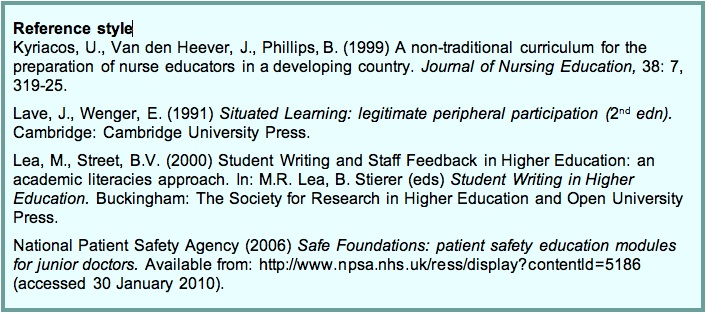
Include full references, as appropriate, using the Harvard referencing style (see example below).
Abstracts must be received in the NET Conference Office by Monday 21 January 2013.
You will receive an email from us confirming receipt of your abstract. Please contact us at the conference office if you have not received confirmation within 5 working days of submission.
All authors will be told if their abstract has been accepted in March 2013.
If you have any questions regarding any aspects of this conference please speak to Anna at Jill Rogers Associates.

Directory of Conferences, conventions, exhibits, seminars, workshops, events, trade shows and business meetings. Includes calendar, dates, location, web site, contact and registration information
|